
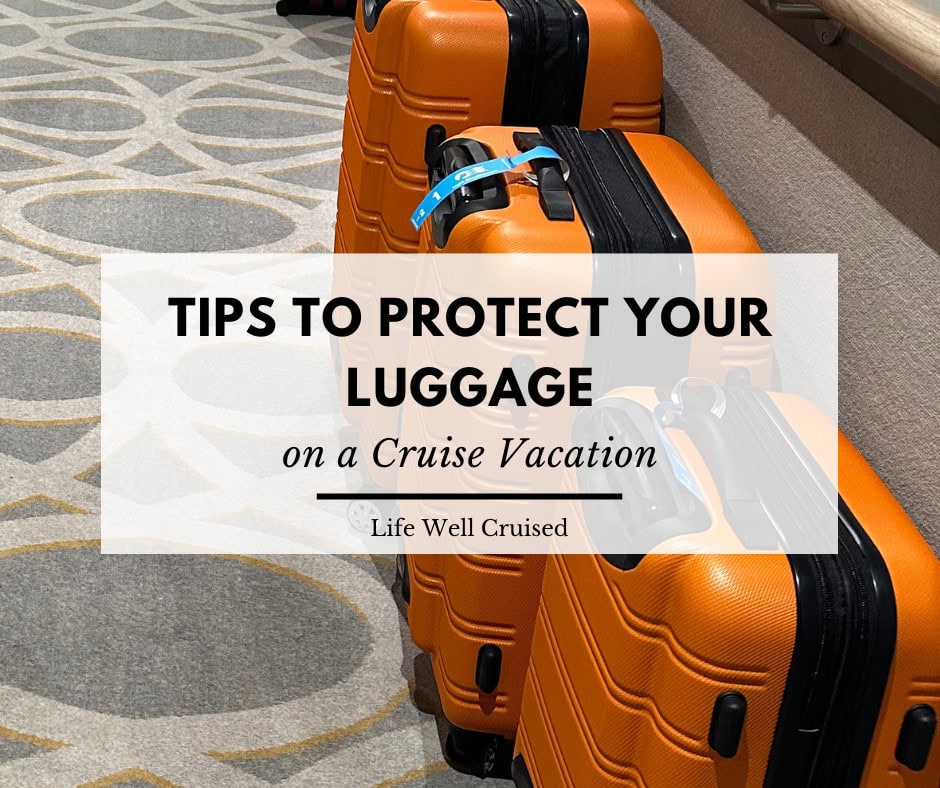
Let’s face it, your luggage goes through quite the journey before it reaches your cruise stateroom! From airport conveyor belts to cruise terminal handling and finally onboard the ship, your bags face plenty of opportunities for mishaps.
These clever tricks will keep your belongings safe from damage, theft, or accidentally going home with someone else.
How to Protect Your Luggage When Traveling and on a Cruise
1. Make Your Luggage Instantly Recognizable
Black rolling suitcases are everywhere at cruise terminals. Add bright colored ribbon, unique luggage tags, or even decals to make yours stand out. Neon-colored straps around bags are extremely effective and make luggage instantly recognizable from a distance.

Try these popular luggage identifiers that experienced cruisers use:
- Colorful fabric luggage covers that slip over suitcases
- Distinctive patterned duct tape wrapped around handles
- Custom photo luggage tags featuring family vacation pictures
- Brightly colored zip ties on all zippers (bonus: they add a bit of security too)
- Iron-on patches or fabric paint for soft-sided luggage
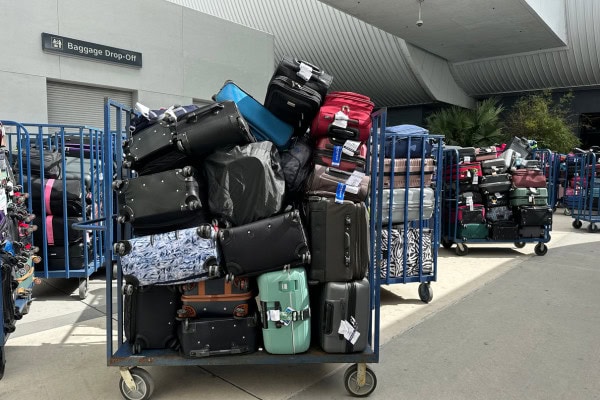
When dozens of nearly identical bags appear on the pier or in the hallway outside your cabin, these simple tricks save time and prevent mix-ups. They’re especially helpful during disembarkation when everyone is trying to locate their bags in the terminal at the same time.
Related: Cruise Luggage Tags and Holders for Every Cruise Line
2. Invest in Smart Luggage Tags
Those paper airline tags rip easily in handling. Purchase durable luggage tags with covered windows for your contact information. Some cruisers swear by the silicone or metal varieties that withstand rough handling.
Digital luggage tags with QR codes that link to contact details are becoming increasingly popular. If a bag gets lost, whoever finds it can easily reach the owner without exposing personal information to everyone.
3. Take Photos of Your Bags (Inside and Out)
Before leaving home, snap photos of your suitcases and their contents. These photos can be lifesavers if your luggage goes missing or arrives damaged. The cruise line or airline will need descriptions and proof of what was inside.
Photos also help you remember what you packed, which is handy when filling out claim forms or trying to recall if you packed that favorite shirt.

4. Pack a Small “First Day” Bag
Keep medications, swimwear, a change of clothes, and toiletries in your carry-on. Your checked luggage might not reach your cabin until evening on embarkation day, and you don’t want to miss pool time while waiting! This strategy has saved many cruisers, especially on sailings where checked luggage doesn’t arrive until after dinner.
Your embarkation day carry-on should include:
- Essential medications and toiletries
- Swimwear and a cover-up
- A change of clothes appropriate for dinner
- Travel documents and ID
- Electronic devices and chargers
- Sunscreen and sunglasses
- Any valuables you don’t want to check
Related: 25 Essential Things to Pack in Your Cruise Carry-On Bag
Many cruise veterans use a backpack or small wheeled bag that can easily fit under airplane seats. This approach allows you to start enjoying ship amenities immediately after boarding, rather than waiting for luggage delivery which can sometimes take 6+ hours on large ships.
Related: 10 Tips for a Stress-Free Cruise Embarkation Day
5. Use TSA-Approved Locks
Secure your checked luggage with TSA-approved locks that allow security to inspect your bags without damaging them. Once onboard, these locks continue to protect your belongings if you leave your luggage unattended in your cabin during the day. Remember that cruise ship hallways are busy places. A simple lock discourages opportunistic theft when your bags are sitting outside your door.
Cruise security experts recommend different lock strategies depending on your situation:
- For checked luggage: Use TSA-approved combination locks (no keys to lose)
- For day bags in port: Consider a retractable cable lock that can secure your bag to a fixed object
- For cabin safes: Use the electronic safe but also place items in a locked bag inside the safe for double protection
- For connecting cabins: Lock any bags containing valuables even when leaving them in connecting rooms with family members
Many seasoned cruisers also lock their luggage before placing it outside their cabin on the final night for collection. This extra precaution helps protect belongings during the busy disembarkation process when bags are moved through public areas.
6. Wrap Fragile Items Thoughtfully
Planning to bring home souvenirs? Pack bubble wrap or clothing to cushion breakables. Deflated air pillows take up almost no space in a suitcase but can be inflated to protect treasures for the journey home.
For liquids like wine or olive oil, use specialized bottle protectors or seal them in multiple layers of plastic bags to prevent a messy disaster.
7. Purchase Travel Insurance With Baggage Protection
It’s always a good idea to purchase travel insurance to protect your cruise vacation investment. However, a good travel insurance policy can be helpful when it comes to insuring your luggage and it’s contents as well.
Many travel insurance policies cover lost or damaged luggage. Check your coverage before sailing and consider purchasing additional protection if needed.
Luggage protection includes:
- Third-party luggage warranty programs
- Specialized cruise insurance with enhanced baggage protection
- Baggage delay coverage that provides funds for necessities if your luggage is delayed
8. GPS Tracking: AirTags and Bluetooth Trackers
Although relatively new, AirTags and other bluetooth trackers have gained huge popularity among cruise travellers. In fact, I put an AirTag in every single bag that I travel with as well as my passport holder!
Several companies now offer luggage tracking services with real-time location updates sent to your phone. These services can provide peace of mind for about the cost of a specialty coffee each day of your cruise.
The latest tracking devices use Bluetooth, GPS, or cellular networks to monitor your bags throughout your journey.
Luggage tracking options include:
- Apple AirTags or similar tracking devices that pair with smartphones (great idea!)
- Subscription-based luggage tracking services
These protection methods are particularly valuable for cruisers bringing expensive items like formal wear, specialized equipment, or high-end electronics in their checked bags.
9. Label Inside and Out
Place a copy of your contact information inside each piece of luggage. If the external tag gets ripped off, this backup identification can reunite you with your belongings.
Many experienced cruisers also add their ship name, sailing date, and cabin number to both inside and outside tags to help crew members route misplaced bags correctly.
Pro cruiser tip: Add your email address so you can be contacted as soon as possible!
10. Shrink-Wrap at the Airport
For international cruises, consider using airport shrink-wrapping services. This plastic covering reduces the risk of damage and tampering, though it will be removed if security needs to inspect your bag.
The cost is usually reasonable (about $15-20 per bag) and offers an extra layer of protection during the journey to your ship.
Shrink-wrapping provides multiple benefits for cruise travelers:
- Prevents zippers from opening during rough handling
- Keeps straps and handles secure against conveyor belts
- Protects fabric from dirt, moisture, and scuffs
- Creates a tamper-evident seal for better security
- Helps identify if the bag has been officially inspected
This service is especially helpful for cruises departing from destinations known for rough baggage handling or when your itinerary includes multiple transfers between airports, hotels, and the cruise terminal. Some experienced cruisers even pack a small roll of stretch wrap in their luggage for the return journey.
11. Check Your Luggage Tags at the Cruise Terminal

When dropping off luggage at the cruise terminal with a porter on embarkation day, double-check your cabin number on your luggage tags. One wrong digit can send your suitcase to the wrong deck or, worse, the wrong cruise passenger.
Taking a quick photo of bags with their cruise luggage tags attached just before handing them over is smart. This can help when describing luggage to the ship’s staff if a bag is temporarily misrouted.
12. Plastic Luggage Cover
If your luggage is a light color or expensive, consider using a reusable plastic luggage cover to protect your suitcase and carry-on bag. These useful travel essentials can be found on Amazon.
Related: 75 Must-have Cruise Essentials from Amazon
Related & Popular Posts:
- 75 Must-have Cruise Essentials from Amazon
- 17 Genius Ways to Pack Light for a Longer Cruise
- 12 Genius Cruise Ship Bathroom Hacks and Organization Tips
- 17 Cruise Ship Cabin Locations to Avoid
- 40+ Must-Have Dollar Store Cruise Items & Hacks
- 17 Rookie Mistakes First Time Cruisers Should Avoid
- 27 Cruise Packing Mistakes You Might be Making
- 13 Big Cruise Embarkation Day Mistakes Cruisers Must Avoid
Final Thoughts on How to Protect Your Luggage on a Cruise Vacation
Following these tips won’t guarantee completely trouble-free luggage handling, but they’ll significantly reduce your chances of problems. After all, your vacation should be about enjoying those ocean views and amazing ports—not worrying about your belongings!
How do you protect your luggage? Please let me know in the comments below.
Happy Cruising!
Ilana
If you’ve found this helpful, don’t keep it to yourself ;-)! Please share it on Facebook or save it for later on Pinterest (share buttons at the top of the post). Thank you.